Own your own 210 ha (~500 ac) national park.
Located on the Micalong Creek, between Canberra and Tumut, this property is covenanted (see section 9 below) for its value as a wildlife corridor and as potential spotted-tailed quoll habitat. The current owners would consider sub-dividing into two blocks. For more information email micalong@aupuzzle.com.au
1. Landscape
Micalong Creek is a permanent stream that flows from the Micalong swamp (Snowy Mountains National Park) through pine plantations and grazing land to the Goodradigbee River near Wee Jasper, NSW. Its slopes form a corridor of native vegetation along which wildlife can move. The property has approximately 2.2 km of frontage to this stream.
Click here for video gorge within property
Rising about 850 feet (260 metres) above the creek through predominantly peppermint (Eucalyptus radiata) forest, with red stringy barks, apple box, snow, swamp, mountain and manna gums, the property is covenanted (Biodiversity Conservation Trust, NSW) for its value as part of a wildlife corridor and as potential spotted-tailed quoll habitat.
2. Native and introduced animals
Include common and iconic species such as grey kangaroo, sacred kingfisher and platypus
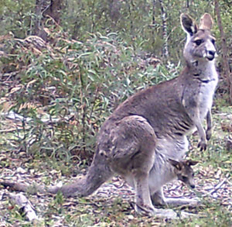
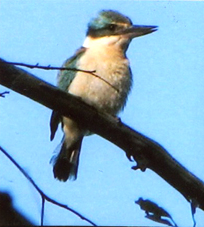
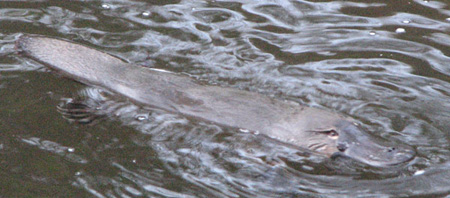
And threatened species such as the greater glider
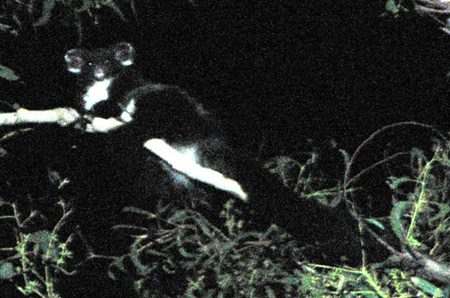
(a) Native mammals sighted (click for list), other native mammals potentially present, and feral mammals
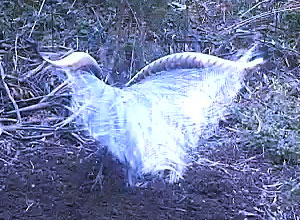
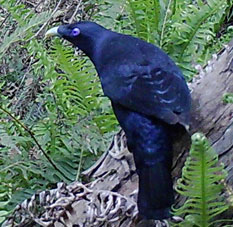
(b) Birds (minimal list here). Species include two mimics, Click below for video of the mimics
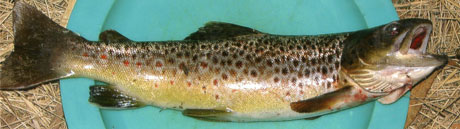
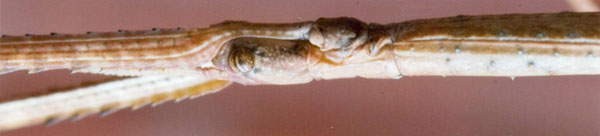
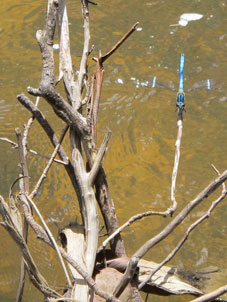
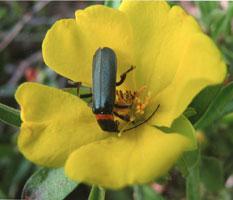
Many other classes of aquatic and land animals - not yet investigated, but including trout, stick insects & dragonflies seen below
3. Plants
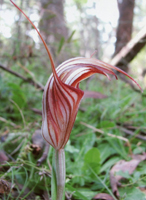
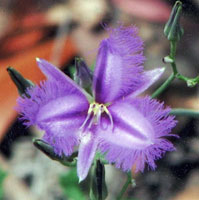
(a) 'Higher' plants (list here)
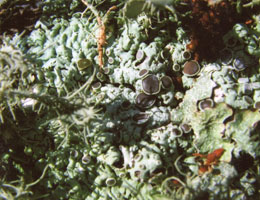
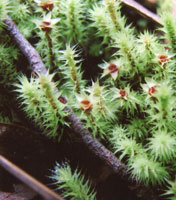
(b) 'Lower' plants
Ferns and crytogams not yet investigated
4. Fungi
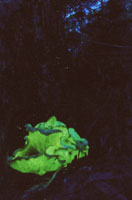
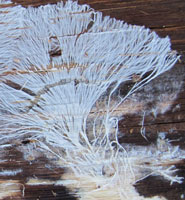
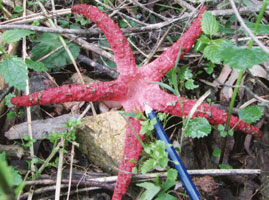
Not yet investigated, but includes the luminous ghost fungus (below left, image Thomas Bush) and the stinkhorn Clathrus archeri (below right)
5. Housing/accommodation
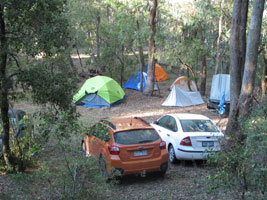
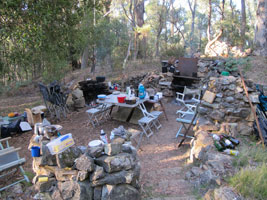
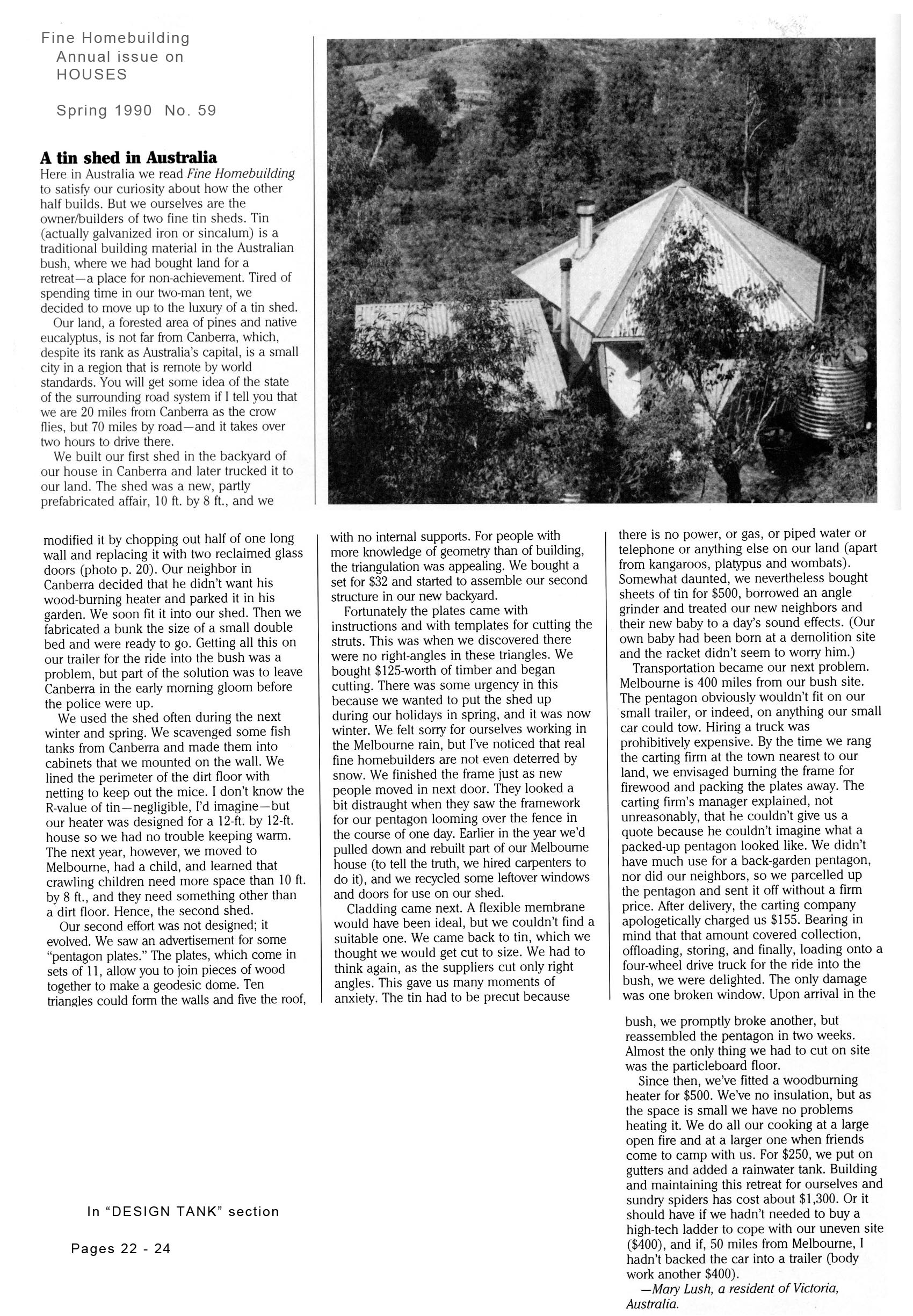
There is no house, but storage sheds can serve as refugia. One of these sheds featured in the American magazine 'Fine Homebuilding' (Spring 1990 no 59). A rearranged version of the article is available here. You can see the sheds in the panorama. Cooking is an outdoor occupation.
6. Recent History
Property has been in the hands of the current owners since 1980.
A sheep wash/dip made of timber slabs and iron, and remnant fences indicate that some of the property was used for rough grazing in the early 1900s.
Most of the property is old growth forest, but in the mid 1900s the then-owners cleared part for cattle grazing. The cleared parts of the property are in transition back to native vegetation (carbon capture and storage).
7. Maps
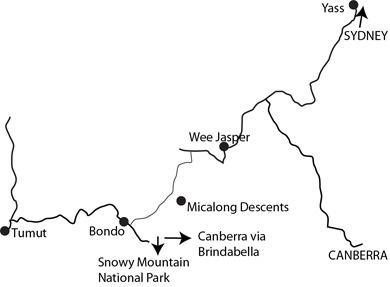
The property is about 2 hours from Canberra, 1.3 hours from Yass, 45 minutes from Tumut and 30 minutes from Wee Jasper. Part of the Hume and Hovell walking track skirts the western boundary. Careys Caves and the Burrinjuck R$eservoir are near Wee Jasper. The Snowy Mountains National Park is within walking distance via the Hume & Hovell track and is accessible by road too.
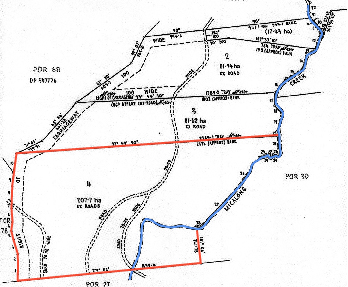
Micalong Descents is bounded by the lines shown in red and the Micalong Creek. The internal road indicated are notional. Most have been acquired by the current owners. Micalong Descents is accessible with conventional vehicles. Service tracks within the block are 4WD.
8. Future management
The current owners have taken a stewardship approach to management. They embedded a level of protection for the property by entering a Trust Agreement with the Nature Conservation Trust (now the Biodiversity Conservation Trust). The existence of this covenant is evidence of the conservation value of the block as part of a wildlife corridor along the Micalong Creek to the Snowy Mountains National Park. It is potential habitat for spotted-tailed quoll, a species classed as vulnerable.
Under the covenant, two sites each of 1 ha are set aside for housing. Grazing and farming is excluded. Owners are responsible for controlling pest plants (mostly blackberry) and animals (the latter in collaboration with surrounding landholders). Vegetation is monitored in conjunction with the LLS. Technical advice on management is available from the LLS and Biodiversity Conservation Trust, and financial assistance may be provided from time to time.
Future owners could enjoy documenting insects, birds, liverworts & mosses, ferns, fungi, gastropods, arachnids, crustaceans, reptiles etc (but are not obliged to do so).
9. Information about covenants
A conservation covenant is a legally binding agreement attached to the title of a property.
A conservation covenant does not dissolve on the sale of a property.
Covenanted properties are supported by different bodies in each State.
Conservation covenants restrict the use of land within the reserved area, and often give additional responsibilities to the owner of the covenant. Many ordinary activities are either not permitted, or have strict guidelines applied to them. The intent of these restrictions is to conserve the habitat of unique flora and fauna.
In some circumstances, changes to the Conservation Plan may be negotiated.
Benefits of a conservation covenant include:
*
Exemption from land tax (for the area under covenant);
*
Rate rebates in some council areas (100 % in the case of Micalong Descents);
*
Access to support, expertise and advice;
*
Supporting applications for funding for environmental works; and
*
A sense of well-being from knowing that you have protected your land for future generations and will be making an important contribution to nature conservation in Australia.
Conservation covenants are a part of biodiversity conservation throughout Australia, with some variation between States. The text above was adapted from the Tasmanian system.
In NSW they are managed by the Biodiversity Conservation Trust
Legal information specific to NSW is available from the Environmental Defenders Office
Information about the agreement for Micalong Descents is available on request to the owners. Email micalong@aupuzzle.com.au